en
Food & Drink / Insights
Jun 6 - 2023
Reading time: 4'

Food styling. Looks so good you could eat it with your eyes

The art of transforming food into an object of desire.

“One thinks, dreams, and acts according to what one drinks and eats.” Those are the words of F.T. Marinetti from his 1930 Manifesto of Futurist Cuisine. And yet, in front of a billboard for a new yogurt or a TV spot for ice cream, Marinetti might say today “One drinks and eats according to what one dreams.

In other words, according to what advertising makes us dream.

Because when it comes to today’s food industry and consumer habits, how we present food plays a huge role in what we eat. Not only does it influence purchasing decisions, but it can even affect appetite. And if that’s now possible, it’s thanks in part to the art of transforming dishes and ingredients into pure objects of desire.

That is the art of food styling.

An art that involves preparing and presenting food for photography, media and advertising.

The representation of food in art is certainly nothing new.

Food has been portrayed since prehistoric times in cave paintings, and in Ancient Rome, in mosaics of banquet scenes.

But it doesn’t stop there.

Fruit baskets, sandwiches and wine glasses have traversed styles and centuries, transitioning from still life paintings by Flemish painters to masterpieces by Morandi and Picasso, eventually transforming into Andy Warhol’s silkscreen prints of Campbell soup cans, marking the first major clash between art and advertising.

In short, as often happens, we haven’t invented anything. Or almost.

Styling Francesca Versolatto. Ph Maurizio Di Iorio.

But what does a food stylist really do?

Today, many roles contribute to the success of a food campaign, but one in particular truly makes a difference: a food stylist.

As it involves food preparation, one might think a food stylist is first and foremost a cook. Since it involves images, one might have the impression they are specialist photographers. In some cases, this may be true, but that’s not the point: a food stylist is the person who can make a deflated panettone look perky and a grilled chicken breast appear irresistible.

To better understand what a food stylist actually does day-to-day, we went straight to the source.

Luisa Chiddo – ph Orkun Orcan

Luisa Chiddo, Experience, Network, and Dexterity

Connecting from Dubai – where Luisa was shooting for an international brand. When asked, “How would you describe your job?” Luisa Chiddo responded confidently, “I create fake food for advertisements.

Luisa is one of the most recognized and esteemed Italian food stylists – even Blossom has collaborated with her – and she loves to define herself as an artisan.

She learned her craft through hands-on experience, and after years of hard work, today she can recreate an Indian dish with inedible ingredients for a photo shoot, or bring a resin ice cream to life, the kind that doesn’t melt after hours of shooting and intense spotlights.

Her work is artisanal, but it goes beyond just craftsmanship.

For Luisa, a good food stylist must have a list of reliable suppliers: from trusted fruit vendors able to find three different types of cherries in February to producers of special materials. But they must also be highly efficient: “I started in the USA with one of the best food stylists in the world. We were an all-female team and she made us work like military battalions. That’s how I learned organization,” says Luisa, who adds, “Being organized allows you to take more and better shots.”

In addition to creating attractive and beautiful images, an organized set saves customers time and post-production costs.

Styling Luisa Chiddo

While Luisa remains a food stylist on every set, the skills she brings to the table are always different. Despite the breadth of knowledge required, specialization remains a fundamental characteristic in the industry. “There’s only one person in Italy who can make tuna fish look good. Everyone knows it!” says Luisa. “On the other hand, I excel at shooting ice cream. But even in this field, there are very few of us in Italy.”

Styling Francesca Versolatto. Ph Studio462

Francesca Versolatto, Home Economist

Amongst the few Italian food stylists specializing in ice cream, Francesca Versolatto has an international curriculum and an extraordinary talent for concise explanations. To explain what a food stylist does, Francesca chooses an analogy: “It’s a bit like a make-up artist. Except instead of models, we work with food and beverages. The process is similar: casting, make-up, final touches, and then it’s time to photograph. In other words, product selection, composition and creation, adjustments, and shooting.”

Continuing with the parallel, Francesca manages to explain the value of her work with enviable simplicity: “Doing a campaign for a food product without a food stylist is like doing a campaign for cosmetic products with models who haven’t brushed their hair and aren’t wearing makeup. Would you do that?”

That said, food styling doesn’t necessarily mean producing images where the product looks unnatural or fake.

On the contrary, Francesca reveals that the current trend is towards a more natural presentation of food, where even post-production is “lighter” without compromising the image’s appeal.

Styling Francesca Versolatto. Ph Francesco Van Straten.

The current trend

is moving towards

increasingly natural

images

that evoke

a sense

of sustainability.

Samuela Conti. Beyond Advertising, Inside the Scroll.

In today’s world, food communication isn’t limited to advertising. Just think about the countless edible photographs we see every day in our social media feeds, TV shows, books and magazines.

Samuela Conti, a food stylist, food photographer and content creator knows all about this. Her work ranges from editorial assignments to creating reels for social networks. Her approach is different and complementary to traditional food styling, which originated in advertising.

Samuela tells us that her goal remains to make food desirable, but nowadays, the biggest challenge is finding her own unique style and recognition.

Styling Samuela Conti

Professionals working in the field of digital communication have to compete with an abundance of food images.

Styling Samuela Conti

“My greatest satisfaction came when someone I didn’t know recognized one of my photos by its style, set, props and lighting,” says Samuela proudly. But in addition to set design and photography, as a digital content creator, Samuela also does a lot of prep. How do her collaborations work? “Often, products are sent to me. I do a series of test recipes, and once I find the ideal one, I start visualizing the set and choosing the props. Then I begin shooting. For a reel, I usually need at least half a day of shooting.”
Dec 18 - 2025

Progetto Quid. Looking at fashion and people from a different perspective

When we talk about fashion, the picture looks familiar: glossy runways, luxury collections, “sustainable” capsules. Shift the angle slightly, and a different reality comes into focus. That’s the choice Anna Fiscale made in 2013, in her twenties, when she founded Progetto Quid.

We are inside Quid’s production workshop in Verona. At a machine edging leather bags sits Bouchra, who arrived from Morocco with experience in fashion, none in leather goods, and no Italian. Here she has learned a new craft and built long-term relationships.
There is Giovanni, who at Quid has found what many look for: the chance to grow professionally without giving up his passions outside of work. And then there are faces, hands, smiles. Faces with complex stories. Hands moving confidently across the fabric. Smiles from people who, in that workshop, feel they truly belong.


What the system calls “waste” becomes a resource.

“Giving new life to people and fabrics” is not a slogan. It is how Quid operates.
Textile leftovers from other companies become high-quality raw material, available at lower cost. People pushed to the margins become trained professionals, with contracts and a horizon to work toward. The result is a supply chain that combines upcycling, design and ethically Made in Italy manufacturing – and, above all, a different idea of value: here, what the system discards is where everything starts.

Walking between the tall shelves of the fabric warehouse and the narrow aisles of the leather stockroom, it becomes clear that this is not just the story of a business model.
It is the story of a shift in perspective that changes everything it touches: the world of work, the fashion industry, and the lives of the people inside both.

Nov 25 - 2025

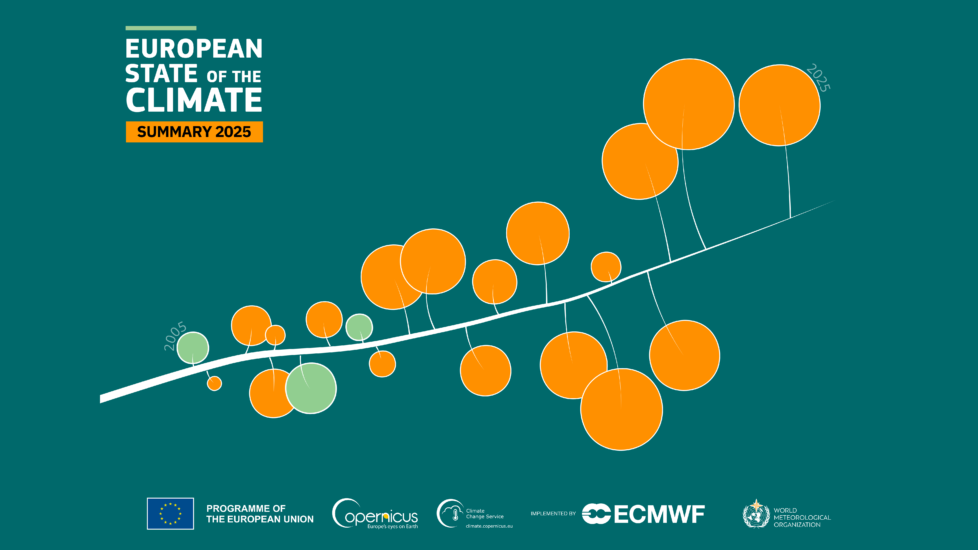
The world is changing — fast. How do we keep up?

Runway 2025-11-20T14_23_22.290Z Upscale Image Upscaled Image 5120 x 2560

Climate. Social media. AI. New generations. Crazy expectations. The landscape is shifting beneath our feet. Every innovation, every disruption, demands a reset.

But one thing never changes: the need to communicate.

From cave walls to cloud servers

Ancient hunters trading stories by firelight. History scratched into stone, painted on cave walls. Scribes inking wisdom onpapyrus. Ideas spread by mouth, messages passed by hand. From radio to television. Texts to the infinite digital world.

No matter the age or technology, communication is essential. Its survival. Human connection. Knowledge must move —or it’s lost. And so are we.

There’s a lot at stake.

Rising temperatures and melting glaciers. Catastrophic wildfires and devastating floods. Human-induced emissions that pollute the air we breathe. Issues affecting our climate and atmosphere aren’t just topics for specialists — they impact our daily lives, our health, and our collective future. Data-driven insight is key to empowerment. Awareness is the first step toward meaningful action.

The information is out there. And we all need to hear it.

So what now?

Now we turn scientific evidence into real-world understanding. We transform data into stories. Build bridges between expertise and everyday reality.

Science isn’t just for scientists anymore. It’s for all of us. And we’re here to share the insight – with you.

See how Blossom and Copernicus are changing the conversation about our planet.

Read the case study

Entertainment / Insights
Oct 23 - 2025

Blossom moves to Via Tortona. Where perspectives shift.

Milan, Via Tortona 9. It didn’t take long for Giacomo Frigerio, CEO and Founder of Blossom, to realize this was the right place. This is where we’ve moved, and this is where we invite you to join us in a new chapter of Transforming Perspectives. Watch now.

People say all sorts of things about Milan. That it’s grey and overcast, but also vibrant; international, but never enough; fast-paced, but familiar. Hard to pin down—much like those who can’t sit still and have change in their DNA. That’s Milan. Nowhere is this more true than in Tortona. 

Tortona is a fracture that refuses to heal, where fragments of the past remain embedded in the framework of the present. Once, there were factories, workshops, workers’ homes, and the Porta Genova railway as its backbone. Today, warehouses have become ateliers, old glassworks are now creative hubs, courtyards double as exhibition spaces. There are long-standing shops and concept stores, young designers and the carpenter methodically sanding his furniture, legacy fashion houses and the hardware store owner who’s always been here—each with their own perspective on the neighborhood. There’s a persistent sense of restlessness in the air. 

Blossom couldn’t have chosen anywhere else. Via Tortona 9, in a building that has kept its foundations but transformed many times over. It isn’t just an office; it’s a hub for transformation. Here, people are free to challenge themselves and each other, continually encouraged to reframe their outlook. Anything can happen: team brainstorms, the creation of new tools to rethink communication, unforgettable events and dinners. Giacomo Frigerio saw immediately that this was the right place for Blossom. Together with architects Michele Bellinzona and Alberto Fraterrigo-Garofalo, who oversaw its renovation, he leads us here—into the heart of Tortona. Where transformation happens. 

Retail / News
Oct 14 - 2025
Reading time: 1'

Blossom for Chanteclair: how can responsibilty and effectiveness speak together?

BRANDING AND STRATEGIC RESTYLING

Vert is the line of eco-detergents under the Chanteclair brand. Known for its focus on
sustainability, the range was at risk of being identified with an image that didn’t fully
communicate the strength and performance consumers expect. Blossom stepped in to lead a
strategic restyling: reinforcing the sustainable positioning while making the products’
powerful effectiveness immediately clear. The outcome is a visual identity that moves past the
compromise between green aesthetics and proven performance.

FROM GENERIC CODES TO A DISTINCTIVE MARK

A process of structured dialogue with the Real Chimica team led to a redesign, with a bolder
green palette and a visual hierarchy that highlights the product name and key benefits. The
goal: to overcome the widespread perception that “green” means less effective compared to
traditional cleaners. In this context, Vert’s new image was shaped to make its dual strength
sustainability and cleaning power—instantly visible.

Hero Vert
Global Issues / News
Oct 1 - 2025
Reading time: 1'

This Way to Social Justice: Blossom for ILO at the Global Citizen Festival in New York

For the third consecutive year, ILO has chosen Blossom to give voice—through an official video presented at the Global Citizen Festival in Central Park—to its vision of social justice and decent work. This event brings together activism, institutions, and civil society, shining a light on the crucial issues of work, rights, and sustainability.

The ongoing partnership between ILO and Blossom is built on strategic and creative dialogue, transforming values and priorities into impactful global communication tools. The video challenges us to rethink the role of work: not just a paycheck, but the foundation of dignity, social cohesion, and inclusive development. Data, vision, and a direct call to action: renew the social contract to build a fairer future.

Watch the video and see how partnership can transform the global conversation.

News & Insights
Close
loader_black loader_white