en
Professional Services / Insights
Jan 26 - 2023
Reading time: 4'

Data doesn’t lie. An interview with Alessandro Scartezzini

A huge passion for data and statistics, but with a human touch. Because on its own, data can’t explain everything in marketing or generate value.

What is the relationship between strategy, creativity and marketing? To find out more, we met with Alessandro Scartezzini, founder and administrator of Webperformance, a digital media agency specialized in performance marketing, and a Blossom partner since January 2023.

With a degree in economics, previous experience as a criminologist, a publication on web marketing and over twenty years of experience in the digital world, today Alessandro is an authoritative voice in the performance marketing field.

Q. How did your passion for data come about?
A. I’ve always been a bit of a nerd… My best present ever was the Commodor 64 for my tenth birthday! Even when I was studying economics, I never stopped being interested in IT. My graduation thesis was about online tax fraud. After graduating, I worked at an international criminology research center where I focused on cyber crimes, before entering the digital world as an entrepreneur and founding one of the first-ever online advertising agencies.

Q. And what do you do today?
A. Well…my mum still doesn’t understand [he laughs]. In technical terms, let’s just say I help entrepreneurs to improve their businesses through online tools.

Q. What is the biggest challenge for you today?
A. For me, the challenge of today boils down to making digital business sustainable.

Q. In what sense? Explain to us what Performance Marketing means in 2023?
A. Until a few years ago, the concept was clear: it meant delivering measurable results to clients, such as leads and conversions. This is no longer the case, however. Tracking and tracing actions back to single actions is very difficult now because the average user comes into contact with a product and brand multiple times prior to a purchase or lead. For example, we found that over 60% of users came into contact with a brand through at least 5 other touchpoints before purchasing from our e-commerce sites.

Today, investment on Google or Meta isn’t really what leads to success; results are achieved when the investment is an optimal mix, on the right touchpoints.

Q. So, would it be safe to say that the word “performance” has taken on a new meaning compared to 10 years ago?
A. For sure. Today we tend to think of performance in much broader terms. This is very interesting because it enables us to add brand awareness campaigns to our work, which are difficult to measure in the short term but have proven to yield huge returns in the long term.

Q. There is an extensive overlap of disciplines and knowledge in your line of work. How important is this kind of training in your field?
A. Overlap and cross-fertilization are fundamental, especially in something as complex as the digital world. For example, just stop to think about the right to privacy, which in the last few years has become the most important driver in how we do digital marketing. So, human sciences, law, economics, statistics…they are all interconnected and we need to have a good grasp of all these subjects. Obviously, we can’t master them all. For example, I completely lack aesthetic sensitivity, and my art director never fails to remind me about this [he laughs].

Q. Speaking of art direction, we have reached the crux of the matter: what is the relationship between data and creativity? How are they linked?
A. Well, the truth is that they hate each other [he laughs]. On a more serious note, I believe we really need to be able to differentiate between pure performance campaigns and awareness campaigns. The former requires creative professionals to adapt: if a video of more than 15″ doesn’t work in ADV, then we simply must surrender to this fact. In the latter case, however, creative freedom is paramount.

Q. Has data ever contradicted a choice you made? Or led you to a decision you would never have thought of?
A. For sure. Data is awful in this sense. It’s always right. It tells us we’re wrong every single day, especially as far as the creative part of our job is concerned…

After hours of stacking on the color of a button, the A/B test can give an unexpected response. And, in these cases, even the most certain art director gives up.

Obviously, it is important to know how to read, or even better, predict data. This is only possible with experience, which is an immense value in this field

Q. So data is never wrong?
A. No, it never is. Mistakes are possible, but only when factors that prevent correct collection enter the picture.

Q. So is the take-home message that data always wins over creativity?
A. That’s not how I see it. I believe in a great alliance, obviously as part of an ongoing discussion. In brand awareness campaigns, for example, creative professionals can benefit immensely from numbers: if creativity is strong, numbers confirm the necessary budget for its spread. Free spaces for creativity have ceased to exist: gone are the days in which beautiful creativity is seen by 50K with 100K followers. Now, if you fail to invest, you’ll be lucky if it is seen by 100. So, data is saying that creativity requires investment, always.

Q. This seems like good news for creative professionals…
A. Yes, it is. But it isn’t the only one: the way I see it, creativity remains the single most important lever of performance.

Knowing how to use platforms is important, knowing how to use machine learning is useful, but these are commodities. Creativity is what makes you win over competitors.

Q. Obviously, creativity is confirmed by data, right?
A. Of course. If proven wrong by data, then there’s no discussion, it needs to change.

Q. Does all the data you analyze for your clients give you an overview of trends?
A. Trends are fundamental: we always analyze market and competitor trends for each client. For example, seasonality plays a prime role. Knowledge and understanding of trends are also important for forecasting purposes: we need to understand where we will be during the campaign and during the investment. For example, even when we’re doing brand awareness, we measure the effects of our investments by means of surveys in partnership with Meta.

Q. So what trends will there be in 2023?
A. The scenario for us will be something like this. There won’t be a tremendous rise in the costs of clicks and purchases, and the fact that they will stabilize is positive. In economic terms, trends will vary from sector to sector. The positive trend in tourism will continue, following an already excellent year. We imagine the food and beverage industry will remain stable, with more difficulties for fashion in which there has been a digital setback due to a resurgence of in-store purchases. We see great opportunities for B2B where there are also lots of new tools for lead generations… we’ll just have to wait and see.
Feb 27 - 2026

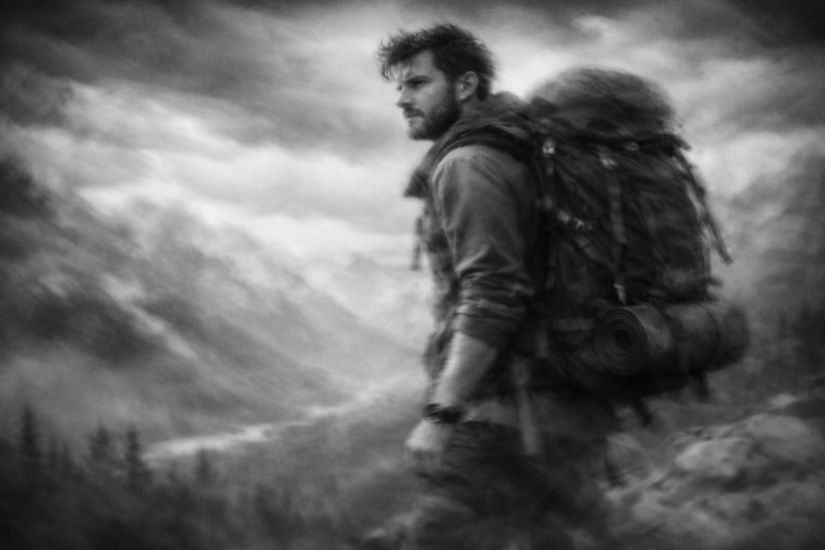
From house cocktail to signature drink: how travel mixology is changing the way we roam

BACKPACKER

There’s never been just one recipe. It’s always been a blend. But today there are more ingredients than ever before.

AI platforms that sketch out itineraries in seconds. User‑generated videos that show the back streets, not the brochure. Trip‑matching tools that decode reels into routes.
Reviews that sway where we eat and stay.

Every swipe, click and comment is another splash in the glass.

The final itinerary? Pure mixology.

The best cocktail? The one that’s crafted to your taste.

Today, the question is less about where you want to go, and more: who are you, and how are you feeling right now?

Brain stuck in 47 open tabs? Ditch your digital, head to the woods and hug a tree. Break‑up blues got you down? Go for some fun vibes in a city that never sleeps.

Matching a destination to your state of mind takes just a few prompts. Pop your budget, departure city and interests into an AI travel platform and before you can say “holiday,” you’ll have a custom getaway at your fingertips.

Even hotels are upping their game. As bookings shift from “three nights in a double room” to “three nights exactly how my nervous system needs it,” they’re offering a menu of amenities to quench your particular taste: top‑floor retreat or bar‑floor buzz, desk or yoga mat, sleep kit or Xbox, minibar stocked with wellness drinks or local craft beer.

Concocting your ideal trip is easier than ever before, and like any good bartender, AI will remember just how you like it.

But here’s the thing. While there’s no doubt AI tools help us plan better, faster, the magic of travel is still human.

The cafè you stumble into. The travel agent who saves your week. The local guide who takes you off the beaten path. Those moments come from people, not systems.

The future of travel is not human vs AI. It’s human with AI.

Less time fighting logistics. More time being exactly where you want to be.

Cheers to that.

Dec 18 - 2025

Progetto Quid. Looking at fashion and people from a different perspective

When we talk about fashion, the picture looks familiar: glossy runways, luxury collections, “sustainable” capsules. Shift the angle slightly, and a different reality comes into focus. That’s the choice Anna Fiscale made in 2013, in her twenties, when she founded Progetto Quid.

We are inside Quid’s production workshop in Verona. At a machine edging leather bags sits Bouchra, who arrived from Morocco with experience in fashion, none in leather goods, and no Italian. Here she has learned a new craft and built long-term relationships.
There is Giovanni, who at Quid has found what many look for: the chance to grow professionally without giving up his passions outside of work. And then there are faces, hands, smiles. Faces with complex stories. Hands moving confidently across the fabric. Smiles from people who, in that workshop, feel they truly belong.


What the system calls “waste” becomes a resource.

“Giving new life to people and fabrics” is not a slogan. It is how Quid operates.
Textile leftovers from other companies become high-quality raw material, available at lower cost. People pushed to the margins become trained professionals, with contracts and a horizon to work toward. The result is a supply chain that combines upcycling, design and ethically Made in Italy manufacturing – and, above all, a different idea of value: here, what the system discards is where everything starts.

Walking between the tall shelves of the fabric warehouse and the narrow aisles of the leather stockroom, it becomes clear that this is not just the story of a business model.
It is the story of a shift in perspective that changes everything it touches: the world of work, the fashion industry, and the lives of the people inside both.

Nov 25 - 2025

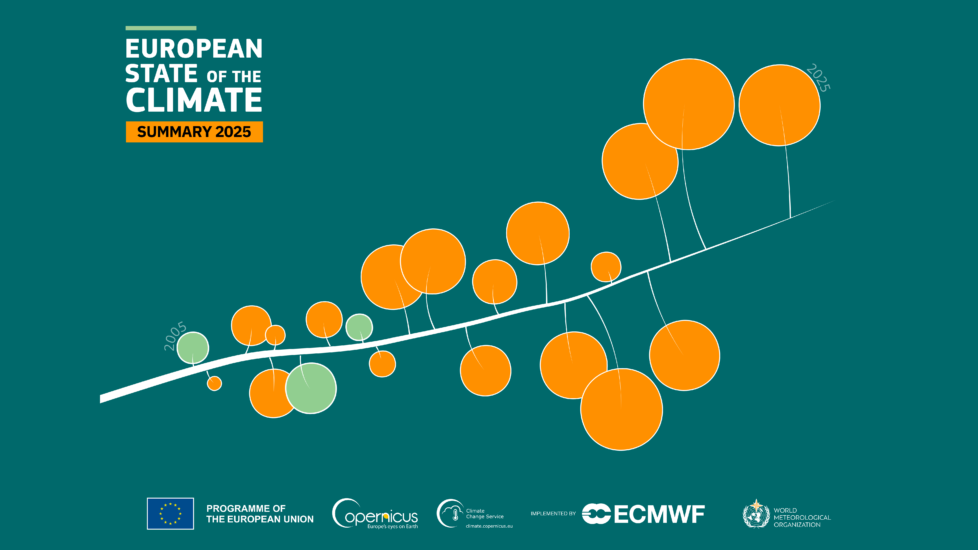
The world is changing — fast. How do we keep up?

Runway 2025-11-20T14_23_22.290Z Upscale Image Upscaled Image 5120 x 2560

Climate. Social media. AI. New generations. Crazy expectations. The landscape is shifting beneath our feet. Every innovation, every disruption, demands a reset.

But one thing never changes: the need to communicate.

From cave walls to cloud servers

Ancient hunters trading stories by firelight. History scratched into stone, painted on cave walls. Scribes inking wisdom onpapyrus. Ideas spread by mouth, messages passed by hand. From radio to television. Texts to the infinite digital world.

No matter the age or technology, communication is essential. Its survival. Human connection. Knowledge must move —or it’s lost. And so are we.

There’s a lot at stake.

Rising temperatures and melting glaciers. Catastrophic wildfires and devastating floods. Human-induced emissions that pollute the air we breathe. Issues affecting our climate and atmosphere aren’t just topics for specialists — they impact our daily lives, our health, and our collective future. Data-driven insight is key to empowerment. Awareness is the first step toward meaningful action.

The information is out there. And we all need to hear it.

So what now?

Now we turn scientific evidence into real-world understanding. We transform data into stories. Build bridges between expertise and everyday reality.

Science isn’t just for scientists anymore. It’s for all of us. And we’re here to share the insight – with you.

See how Blossom and Copernicus are changing the conversation about our planet.

Read the case study

Entertainment / Insights
Oct 23 - 2025

Blossom moves to Via Tortona. Where perspectives shift.

Milan, Via Tortona 9. It didn’t take long for Giacomo Frigerio, CEO and Founder of Blossom, to realize this was the right place. This is where we’ve moved, and this is where we invite you to join us in a new chapter of Transforming Perspectives. Watch now.

People say all sorts of things about Milan. That it’s grey and overcast, but also vibrant; international, but never enough; fast-paced, but familiar. Hard to pin down—much like those who can’t sit still and have change in their DNA. That’s Milan. Nowhere is this more true than in Tortona. 

Tortona is a fracture that refuses to heal, where fragments of the past remain embedded in the framework of the present. Once, there were factories, workshops, workers’ homes, and the Porta Genova railway as its backbone. Today, warehouses have become ateliers, old glassworks are now creative hubs, courtyards double as exhibition spaces. There are long-standing shops and concept stores, young designers and the carpenter methodically sanding his furniture, legacy fashion houses and the hardware store owner who’s always been here—each with their own perspective on the neighborhood. There’s a persistent sense of restlessness in the air. 

Blossom couldn’t have chosen anywhere else. Via Tortona 9, in a building that has kept its foundations but transformed many times over. It isn’t just an office; it’s a hub for transformation. Here, people are free to challenge themselves and each other, continually encouraged to reframe their outlook. Anything can happen: team brainstorms, the creation of new tools to rethink communication, unforgettable events and dinners. Giacomo Frigerio saw immediately that this was the right place for Blossom. Together with architects Michele Bellinzona and Alberto Fraterrigo-Garofalo, who oversaw its renovation, he leads us here—into the heart of Tortona. Where transformation happens. 

Retail / News
Oct 14 - 2025
Reading time: 1'

Blossom for Chanteclair: how can responsibilty and effectiveness speak together?

BRANDING AND STRATEGIC RESTYLING

Vert is the line of eco-detergents under the Chanteclair brand. Known for its focus on
sustainability, the range was at risk of being identified with an image that didn’t fully
communicate the strength and performance consumers expect. Blossom stepped in to lead a
strategic restyling: reinforcing the sustainable positioning while making the products’
powerful effectiveness immediately clear. The outcome is a visual identity that moves past the
compromise between green aesthetics and proven performance.

FROM GENERIC CODES TO A DISTINCTIVE MARK

A process of structured dialogue with the Real Chimica team led to a redesign, with a bolder
green palette and a visual hierarchy that highlights the product name and key benefits. The
goal: to overcome the widespread perception that “green” means less effective compared to
traditional cleaners. In this context, Vert’s new image was shaped to make its dual strength
sustainability and cleaning power—instantly visible.

Hero Vert

News & Insights
Close
loader_black loader_white